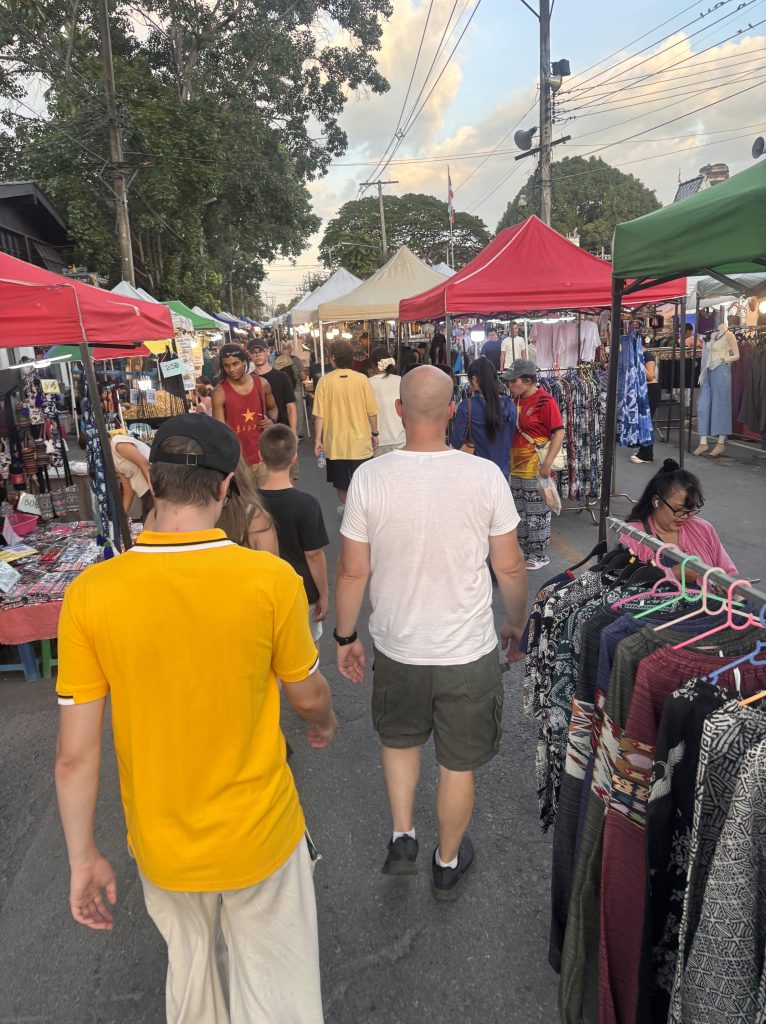
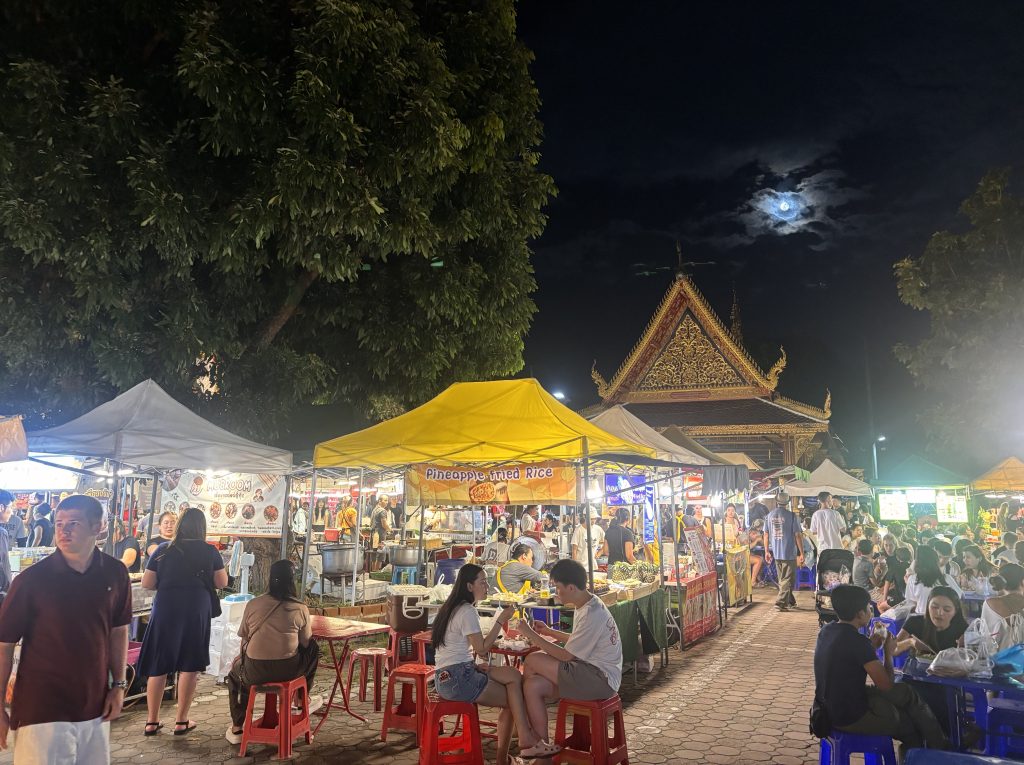
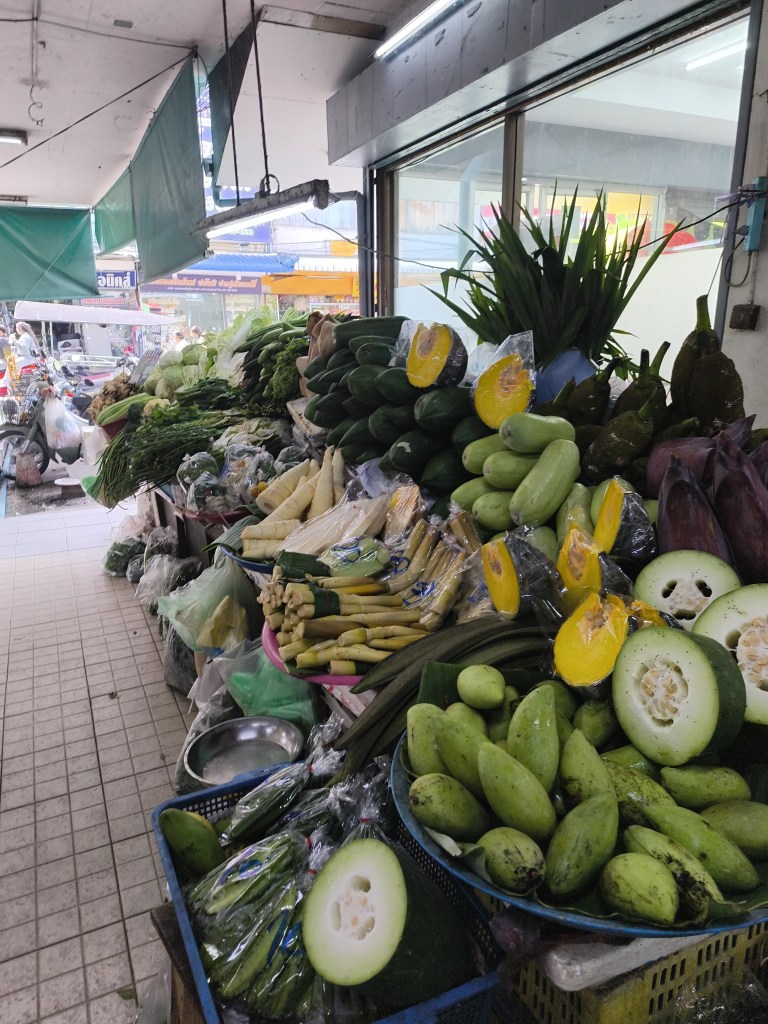
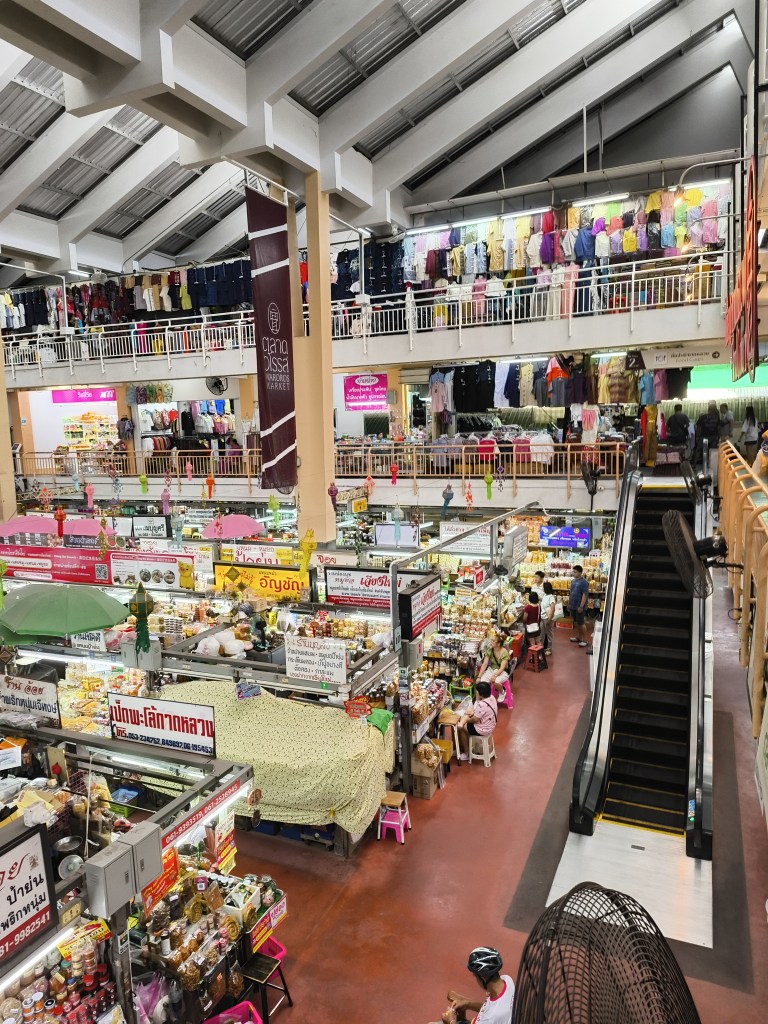
All over Chiang Mai you can find markets of varying sizes, though with fairly similar offerings. During our first few days in the city, we visited several of them and bought some clothes, a couple of bags, and so on. We soon realized that, as mentioned, most markets stocked the same merchandise, so our interest waned after a few days. Now, we mainly visit the markets in search of food and treats! Every Sunday, a large night market stretches across much of the Old City. It draws huge crowds and offers a vast array of things to see and eat.
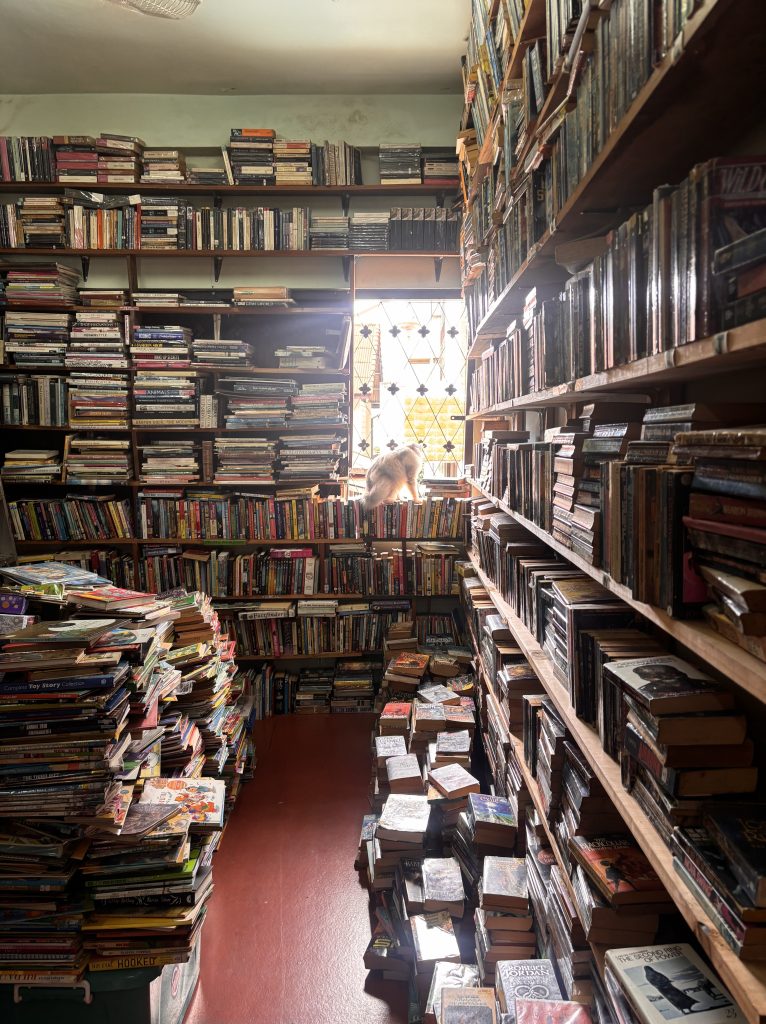
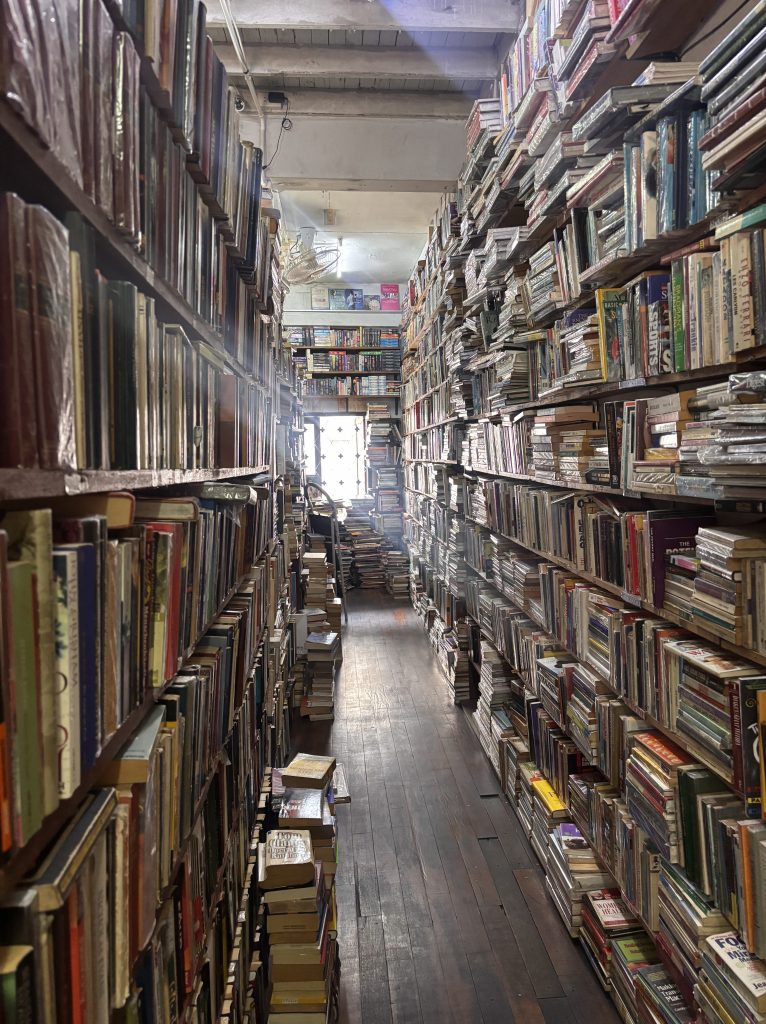
Since three of our family members love to read, we’ve also visited several bookstores in the city; it’s a lovely experience, and we’ve found some inexpensive books in both English and Swedish.
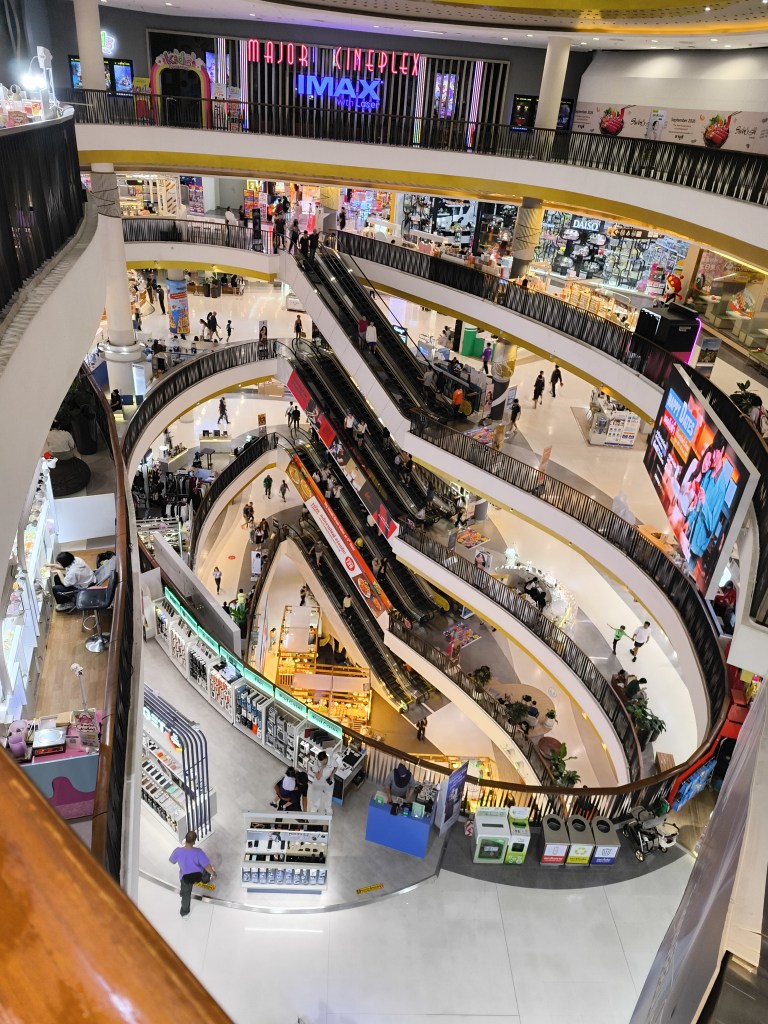
We’ve also visited Chiang Mai’s three largest malls, ranked by size: Central Festival, Central Chiang Mai Airport, and MAYA Lifestyle Shopping Center. We were looking for new mobile phones for Andreas and Penny, and Thai prices are significantly lower than what we’re used to in Sweden. However, there are pitfalls.
According to the salespeople in the IT shops, mobile phones in Thailand come in both ”European” and ”Chinese” versions. For the models we’re considering to be truly comparable, we need to look at the European version. After spending some time Googling images and using AI, we understand why the salespeople are so keen to show us only the European versions: even though the phones look identical on the outside, the internal specifications differ radically for many models. If you are unlucky and fail to examine the mobile phone carefully, the situation could be so bad that it doesn’t even work on European mobile networks.
The three shopping malls differ from one another yet are very similar at the same time. Each has a floor featuring a food court where you can buy tasty, affordable local food. There are also pricier Western options like KFC and Pizza Hut. We almost always eat at the local stalls where the locals eat; we feel the food is best and freshest there due to the high turnover, and we also like to think it supports small local vendors rather than the corporate giants running the Western restaurants.
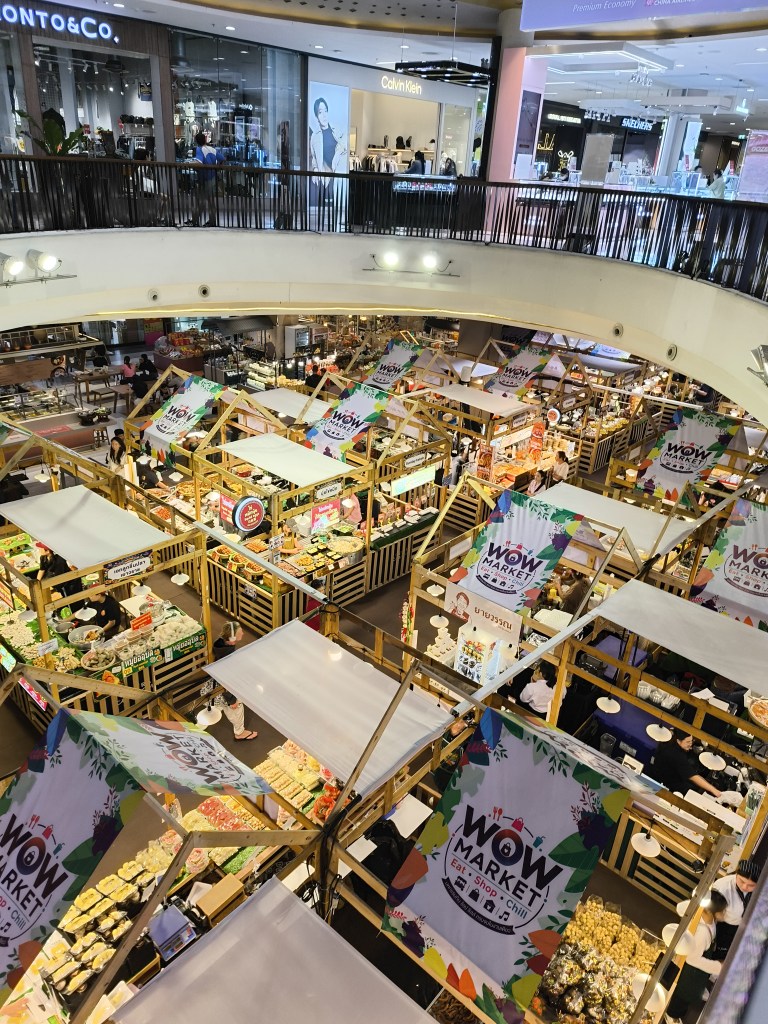
The malls have a similar mix of shops, too—except for Central Festival, which has a floor dedicated almost exclusively to IT products. All three malls are clean and modern, with free restrooms. Free Wi-Fi is available as well, though only for two hours at a time; after that, you have to get a new code from the information desk.
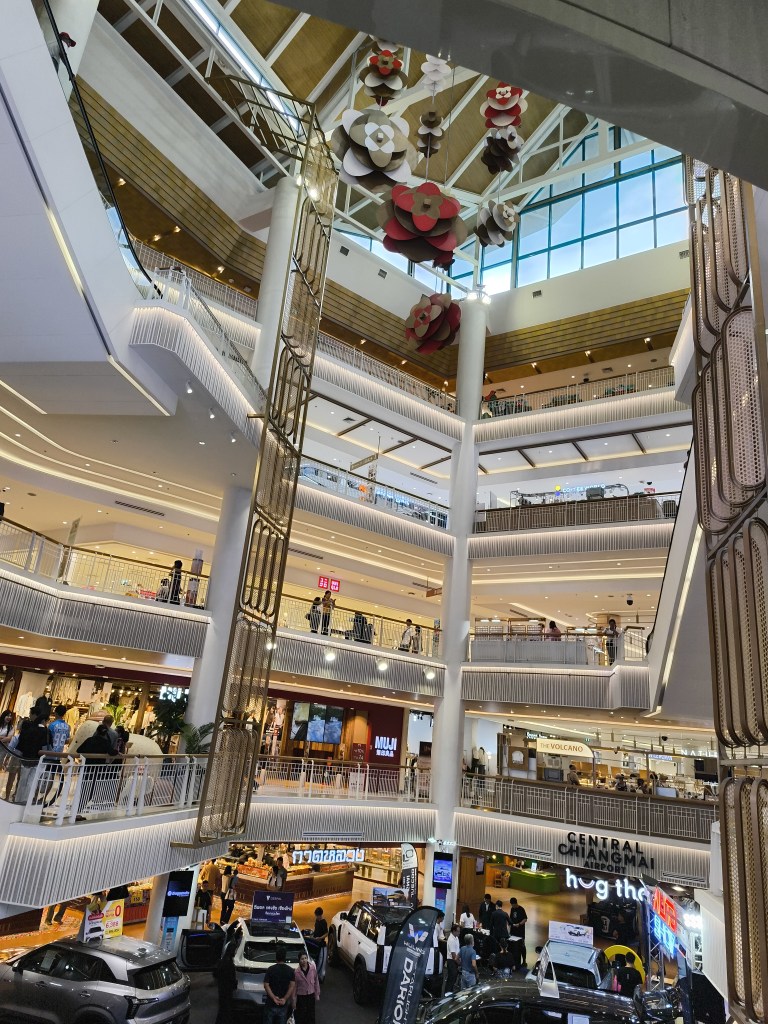
After much deliberation, we find two phones that feel right and that we think we’ll be happy with: an OPPO Reno16 5G and a Samsung S26 Ultra.
Prices in Thailand are much better than in Sweden. For one thing, prices are generally lower due to lower labor costs; for another, many components used in the tech sector are manufactured in Thailand (according to the staff at the shops we visit). As tourists, we are also eligible for a VAT refund of 6–7% at the airport. If you also buy a phone that is on sale, it is entirely reasonable to pay just half the price compared to what it costs in Sweden.
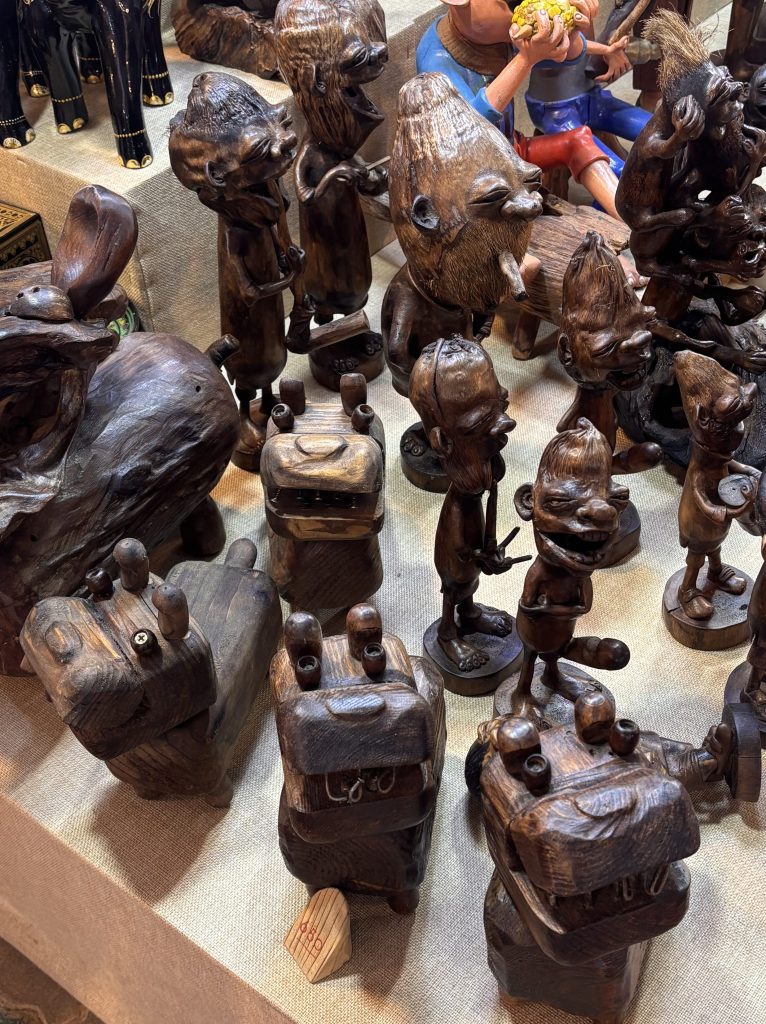
On our tuk-tuk ride back, we reflect on the diversity of commerce in the city. Along the way, people sit on their mopeds, in tin shacks, and under parasols, eager to sell everything from hand-painted hair clips to crocodile-skin bags, as well as smoothies and pad thai. The contrast between this and the large shopping malls can be hard to fully grasp. We see the same pattern when we go out in the evenings to buy food; you might walk past a couple of shabby market stalls selling knock-off sunglasses and wooden elephants, only to step straight into a suit shop where prices start at $2,000. From a Northern European perspective, it might seem strange that this works, but here it just flows along day after day, and we appreciate the mix found here.
//Sabdreasworld


Lämna ett svar